
The Olympia Curios and Curiosities Shop
The Strange History of Sing Wah Locke
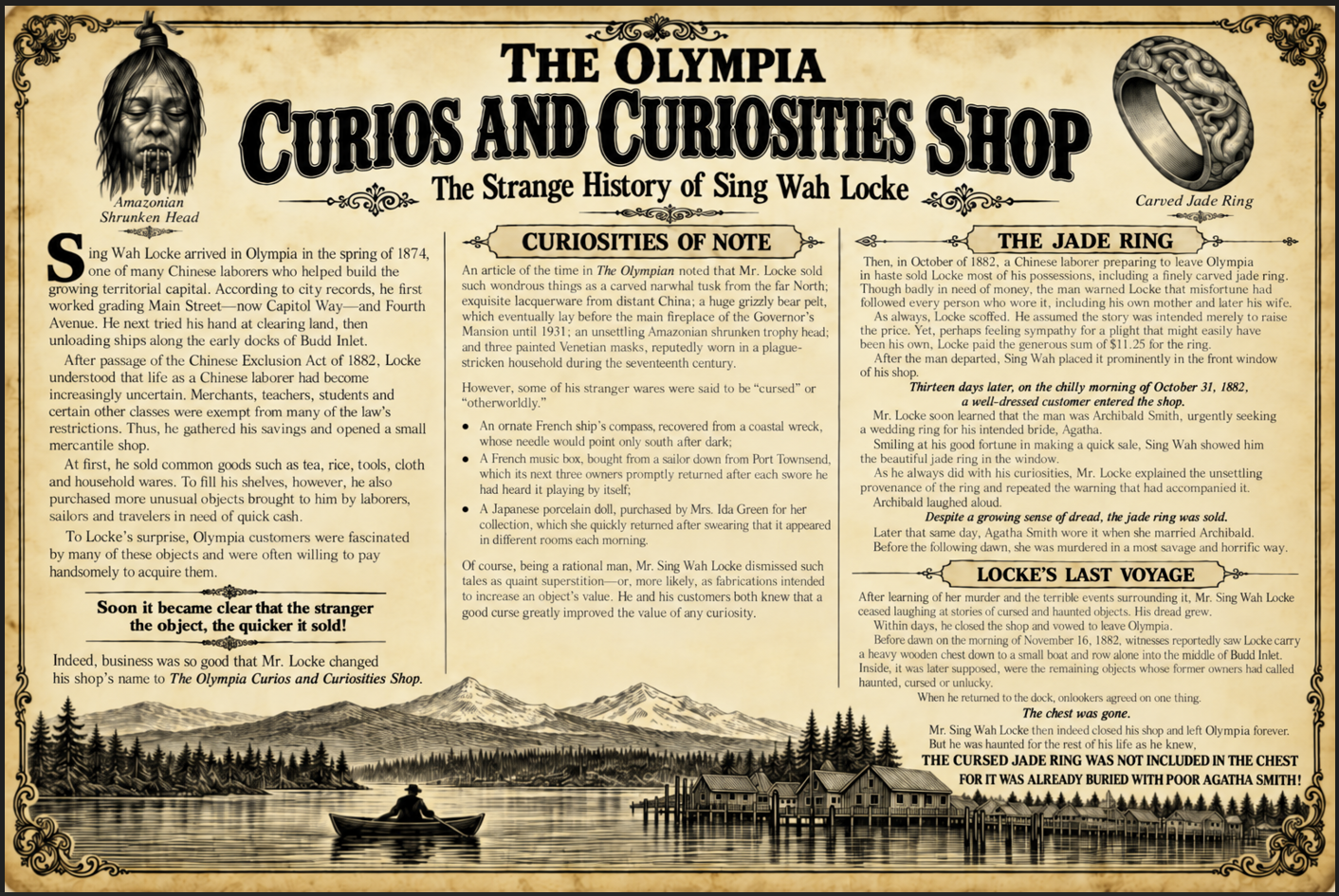
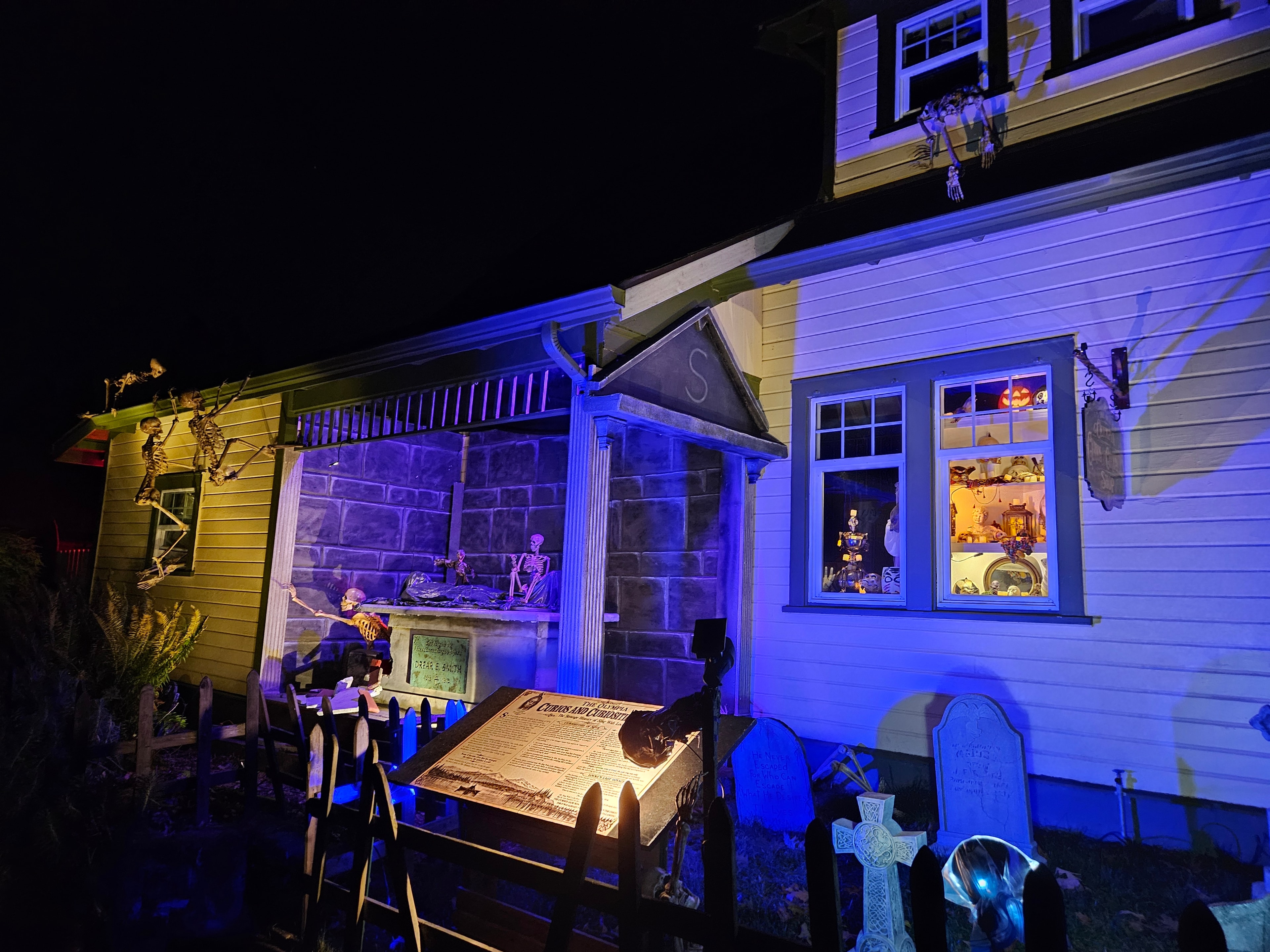
Sing Wah Locke arrived in Olympia in the spring of 1874, one of many Chinese laborers who helped build the growing territorial capital. According to city records, he first worked grading Main Street — now Capitol Way — and Fourth Avenue. He next tried his hand at clearing land, then unloading ships along the early docks of Budd Inlet.
After passage of the Chinese Exclusion Act of 1882, Locke understood that life as a Chinese laborer had become increasingly uncertain. Merchants, teachers, students and certain other classes were exempt from many of the law's restrictions. Thus, he gathered his savings and opened a small mercantile shop. At first, he sold common goods such as tea, rice, tools, cloth and household wares. To fill his shelves, however, he also purchased more unusual objects brought to him by laborers, sailors and travelers in need of quick cash. To Locke's surprise, Olympia customers were fascinated by many of these objects and were often willing to pay handsomely to acquire them.
Soon it became clear that the stranger the object, the quicker it sold!
Indeed, business was so good that Mr. Locke changed his shop's name to The Olympia Curios and Curiosities Shop.
Curiosities of Note
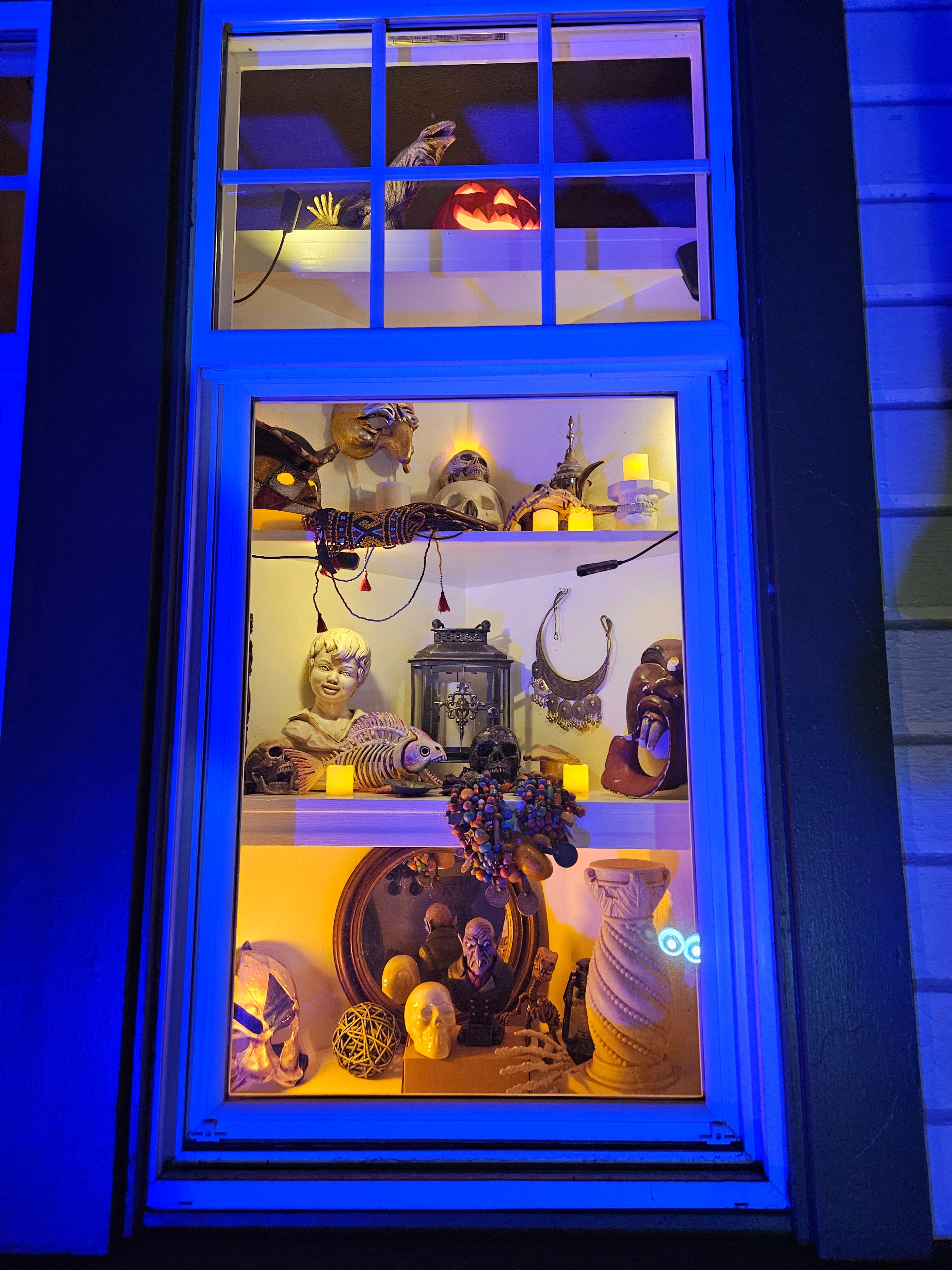
An article of the time in The Olympian noted that Mr. Locke sold such wondrous things as a carved narwhal tusk from the far North; exquisite lacquerware from distant China; a huge grizzly bear pelt, which eventually lay before the main fireplace of the Governor's Mansion until 1931; an unsettling Amazonian shrunken trophy head; and three painted Venetian masks, reputedly worn in a plague-stricken household during the seventeenth century.
However, some of his stranger wares were said to be "cursed" or "otherworldly."
- An ornate French ship's compass, recovered from a coastal wreck, whose needle would point only south after dark;
- A French music box, bought from a sailor down from Port Townsend, which its next three owners promptly returned after each swore he had heard it playing by itself;
- A Japanese porcelain doll, purchased by Mrs. Ida Green for her collection, which she quickly returned after swearing that it appeared in different rooms each morning.
Of course, being a rational man, Mr. Sing Wah Locke dismissed such tales as quaint superstition — or, more likely, as fabrications intended to increase an object's value. He and his customers both knew that a good curse greatly improved the value of any curiosity.
The Jade Ring
Then, in October of 1882, a Chinese laborer preparing to leave Olympia in haste sold Locke most of his possessions, including a finely carved jade ring. Though badly in need of money, the man warned Locke that misfortune had followed every person who wore it, including his own mother and later his wife.
As always, Locke scoffed. He assumed the story was intended merely to raise the price. Yet, perhaps feeling sympathy for a plight that might easily have been his own, Locke paid the generous sum of $11.25 for the ring.
After the man departed, Sing Wah placed it prominently in the front window of his shop.
Thirteen days later, on the chilly morning of October 31, 1882, a well-dressed customer entered the shop.
Mr. Locke soon learned that the man was Archibald Smith, urgently seeking a wedding ring for his intended bride, Agatha. Smiling at his good fortune in making a quick sale, Sing Wah showed him the beautiful jade ring in the window. As he always did with his curiosities, Mr. Locke explained the unsettling provenance of the ring and repeated the warning that had accompanied it. Archibald laughed aloud.
Despite a growing sense of dread, the jade ring was sold.
Later that same day, Agatha Smith wore it when she married Archibald. Before the following dawn, she was murdered in a most savage and horrific way.
Locke's Last Voyage
After learning of her murder and the terrible events surrounding it, Mr. Sing Wah Locke ceased laughing at stories of cursed and haunted objects. His dread grew.
Within days, he closed the shop and vowed to leave Olympia.
Before dawn on the morning of November 16, 1882, witnesses reportedly saw Locke carry a heavy wooden chest down to a small boat and row alone into the middle of Budd Inlet. Inside, it was later supposed, were the remaining objects whose former owners had called haunted, cursed or unlucky.
When he returned to the dock, onlookers agreed on one thing. The chest was gone.
Mr. Sing Wah Locke then indeed closed his shop and left Olympia forever. But he was haunted for the rest of his life as he knew, the cursed jade ring was not included in the chest — for it was already buried with poor Agatha Smith!