The Land Beneath
Smith's Field
Where the old Olympia graveyard once lay forgotten
Before the haunt. Before the headstones. Before the fog rolled in each October to reclaim what the living had tried to forget — there was only the field.
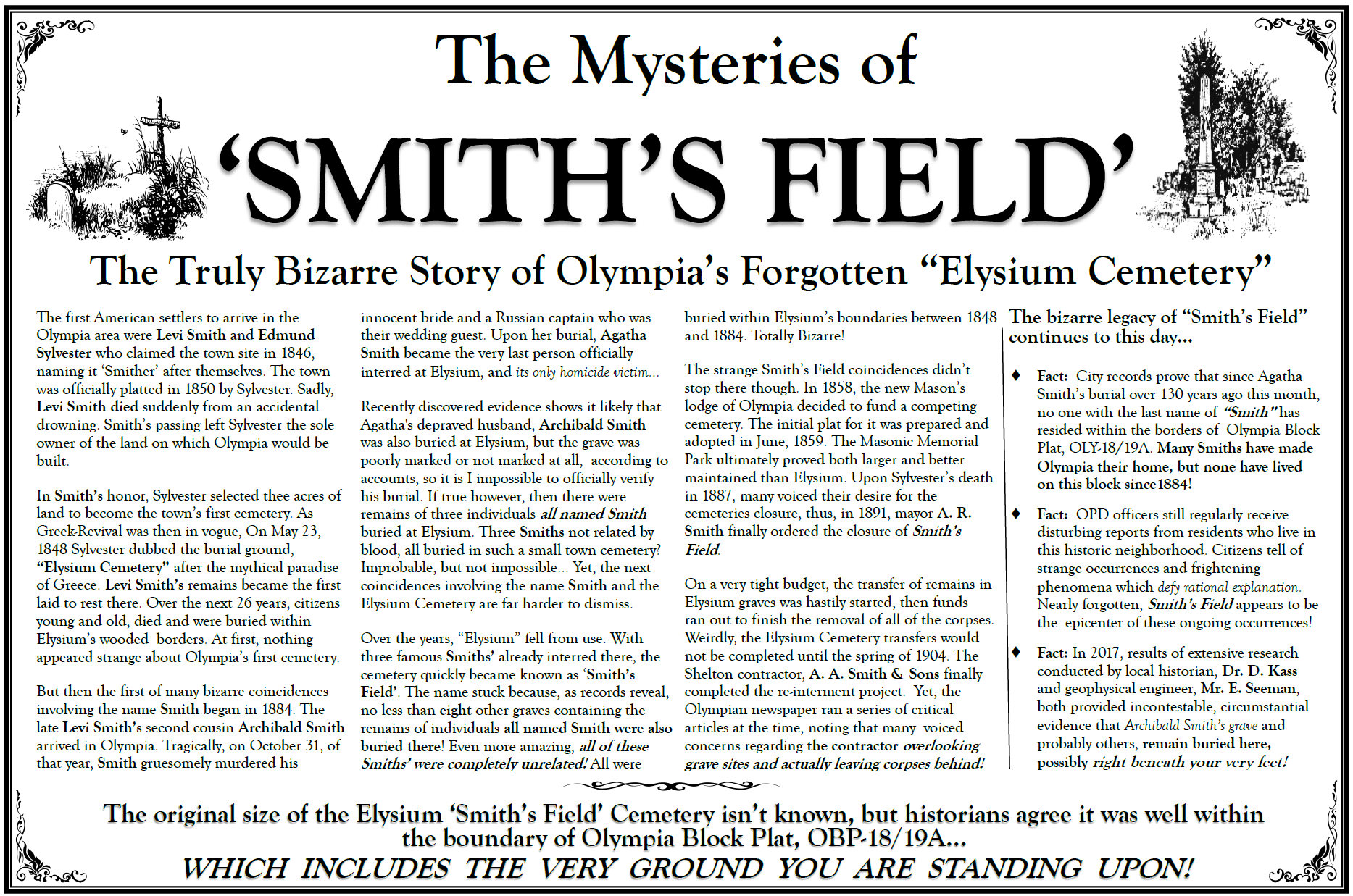
In the earliest days of Olympia's settlement, the land now known as Smith's Field served as the town's first burial ground. Pioneers, merchants, and the nameless poor were laid to rest here in shallow graves, their wooden markers rotting away within a generation. By the time Archibald Smith arrived in 1883, the old graveyard had been all but erased — the land cleared, the dead forgotten, the soil turned over for a gentleman's estate.
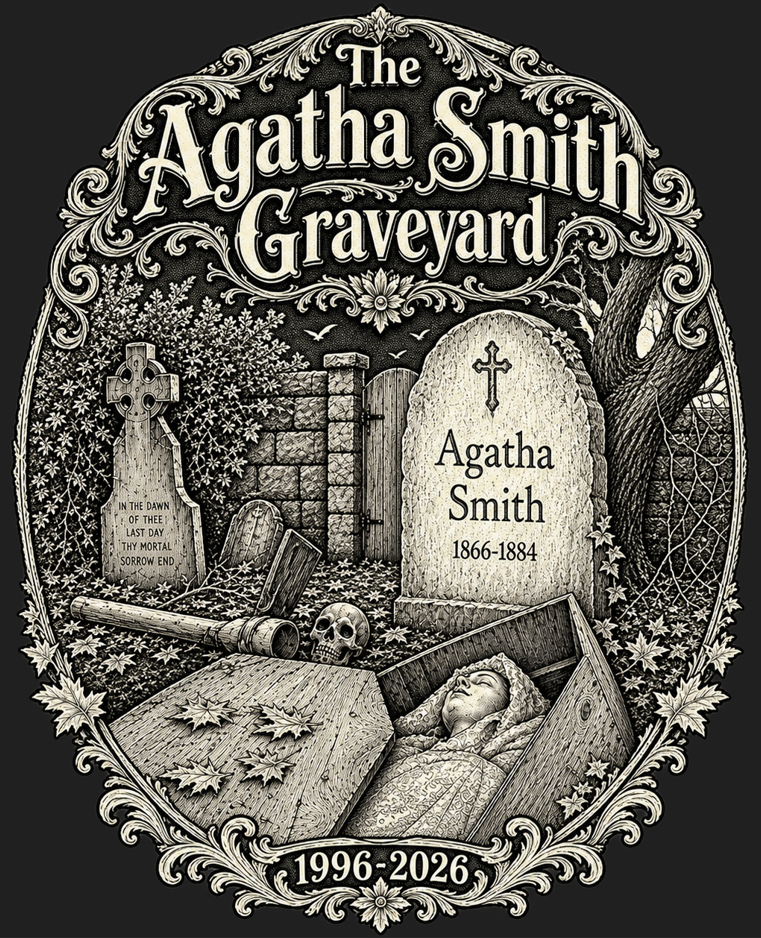
It was here that Archibald built his home. It was here that Agatha was brought as a bride. And it was here, in the cold earth beneath his very floorboards, that the bones of Olympia's forgotten dead lay undisturbed — witnesses to everything that followed.
When Agatha's father buried her in the Old Olympia Graveyard, he did not know he was returning her to the same consecrated ground that had been desecrated decades before. The land remembered. The dead, it seems, had been waiting for company.
Twenty years passed. Archibald returned, mad with guilt, to dig up his wife's grave. He found her — and then he found the tree. But the field did not release him. Those who came to cut him down reported that the ground around the oak was disturbed, as though something beneath had stirred at the moment of his death. The constable's report, filed November 3rd, 1904, noted the soil was "heaved and broken in a manner inconsistent with the weather or any natural cause."
The property changed hands several times over the following decades. Each owner reported the same peculiarities: a persistent cold in certain corners of the yard regardless of season, the sound of fiddle music on still autumn nights, and a general unease that no amount of renovation could dispel. One family departed after only a single winter, leaving behind furniture, clothing, and a diary whose final entry read simply: "They are not sleeping."
Today the field is tended with care and a certain reverence. The Display rises from it each October not as a celebration of death, but as an acknowledgment — that the ground beneath your feet has a long memory, that the forgotten do not stay forgotten, and that on All Hallows Eve, the boundary between what was buried and what walks above grows very, very thin.
Walk carefully. The field is listening.